Technology
Physical AI: software for the real world
Physical AI is AI that works on the physical world rather than only on text and screens — sensing what is happening, modeling it, and acting on it. Toobler builds the software foundation that makes it possible: the connected assets, the operational twin, the models, and the governed layer that acts.
The stack
Sense, model, learn, act
-
Sense — connected assets
Industrial IoT: sensors, gateways and the cloud layer that brings physical assets online.
-
Model — operational digital twin
A live representation of the assets and processes, built on your real data.
-
Learn — industrial AI
Prediction, anomaly detection and decision support on operational data.
-
Act — governed agents
Action taken through a governed, human-approved and audited agent layer.
Proof
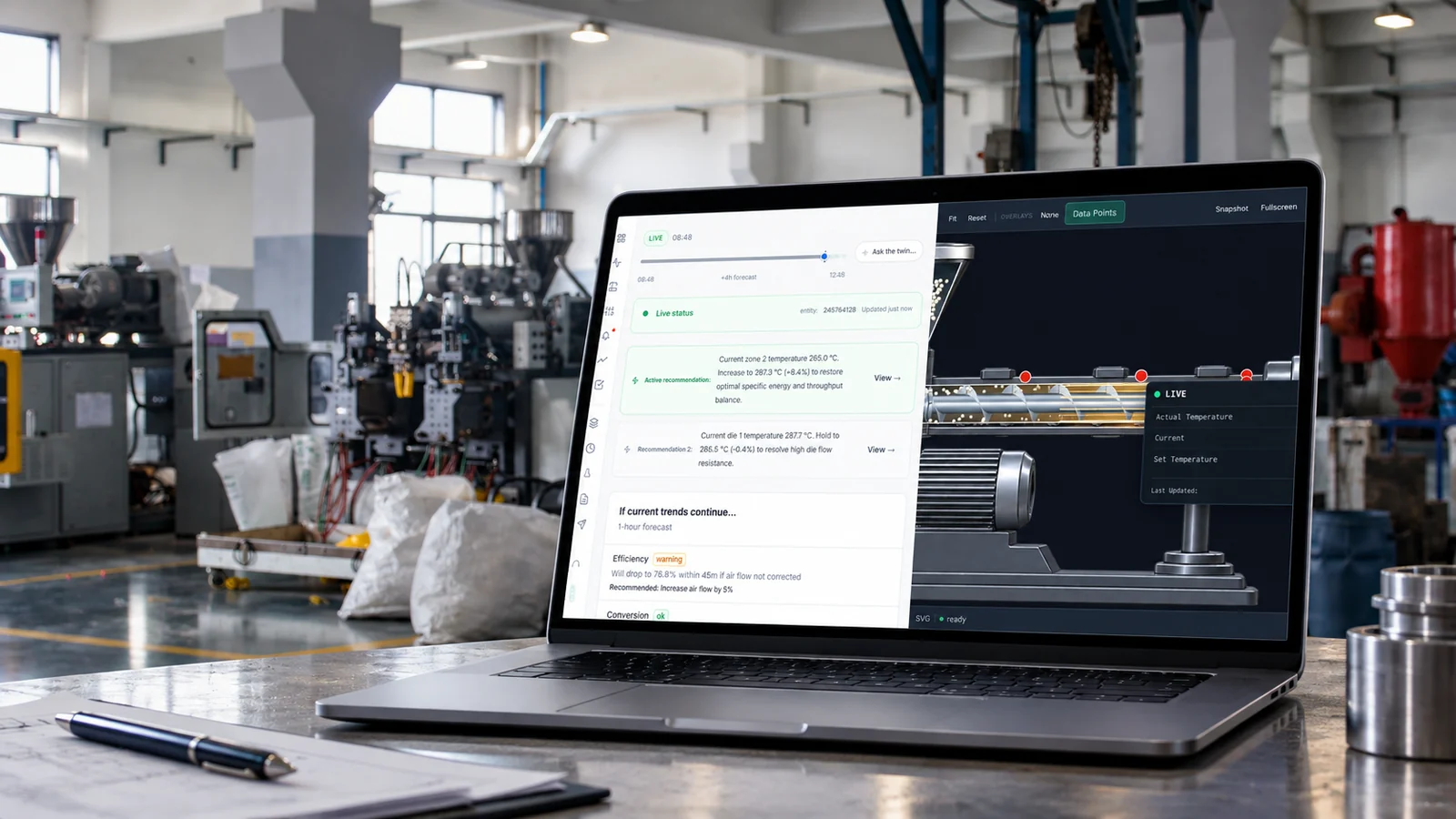
Sensing, modeling and acting on a live production line
A real-time physics digital twin of an extrusion line, and an assistant that recommends the smallest dial change that clears a fault
How Toobler built a real-time physics digital twin and an AI recommender for a plastics extrusion line, advising the smallest dial change that clears a fault.
Proof
Where it has run before
 Case study IoT · Digital Twin · Real-time
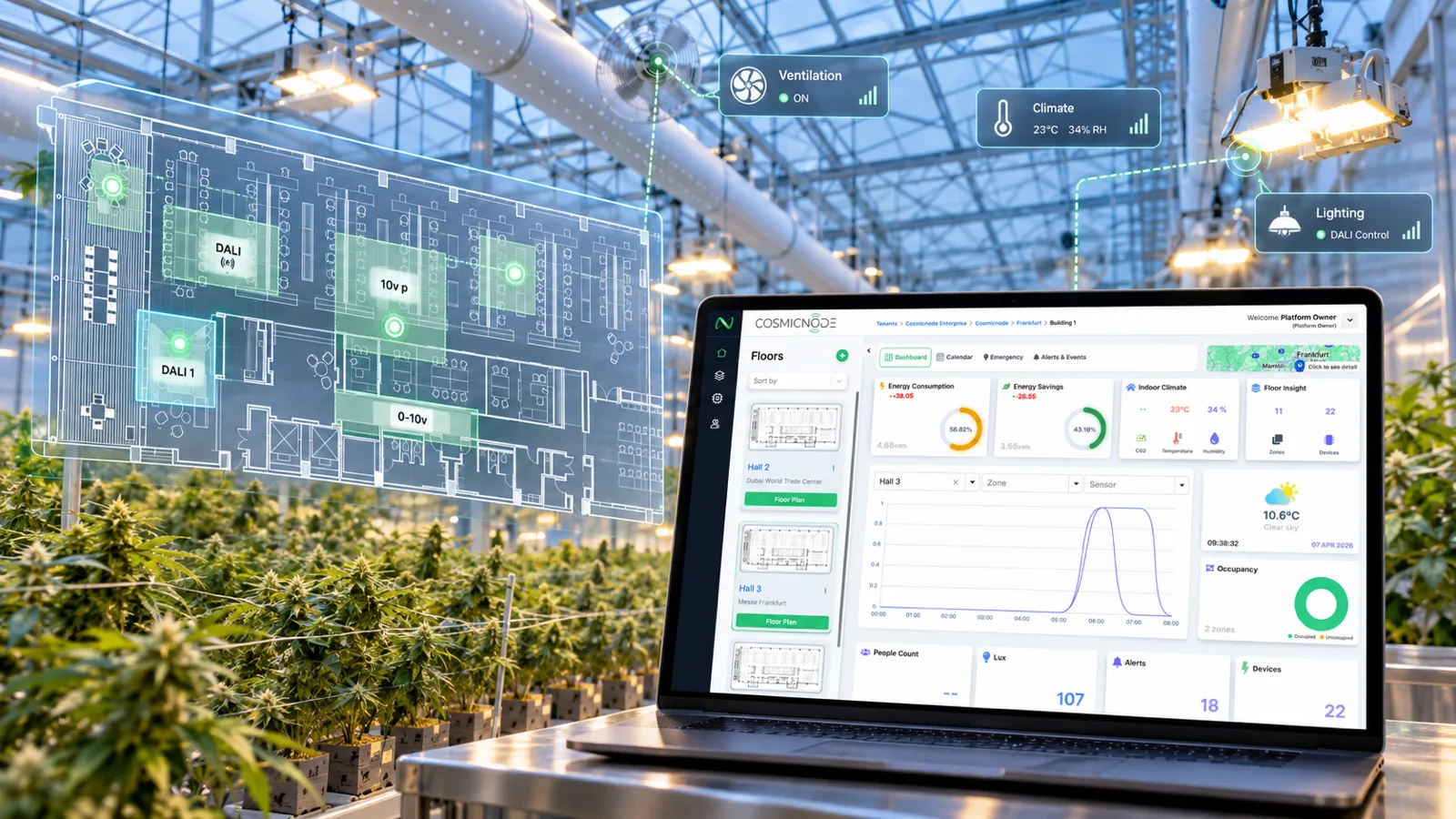
The software platform behind connected smart lighting
How Toobler built Infinity — the multi-tenant, multi-site cloud platform behind CosmicNode's connected lighting: real-time control and monitoring of thousands of LED fixtures and sensors across greenhouses and smart buildings, on a cloud-native (Amazon EKS) architecture.
 Case study IoT · Sensor-to-Cloud
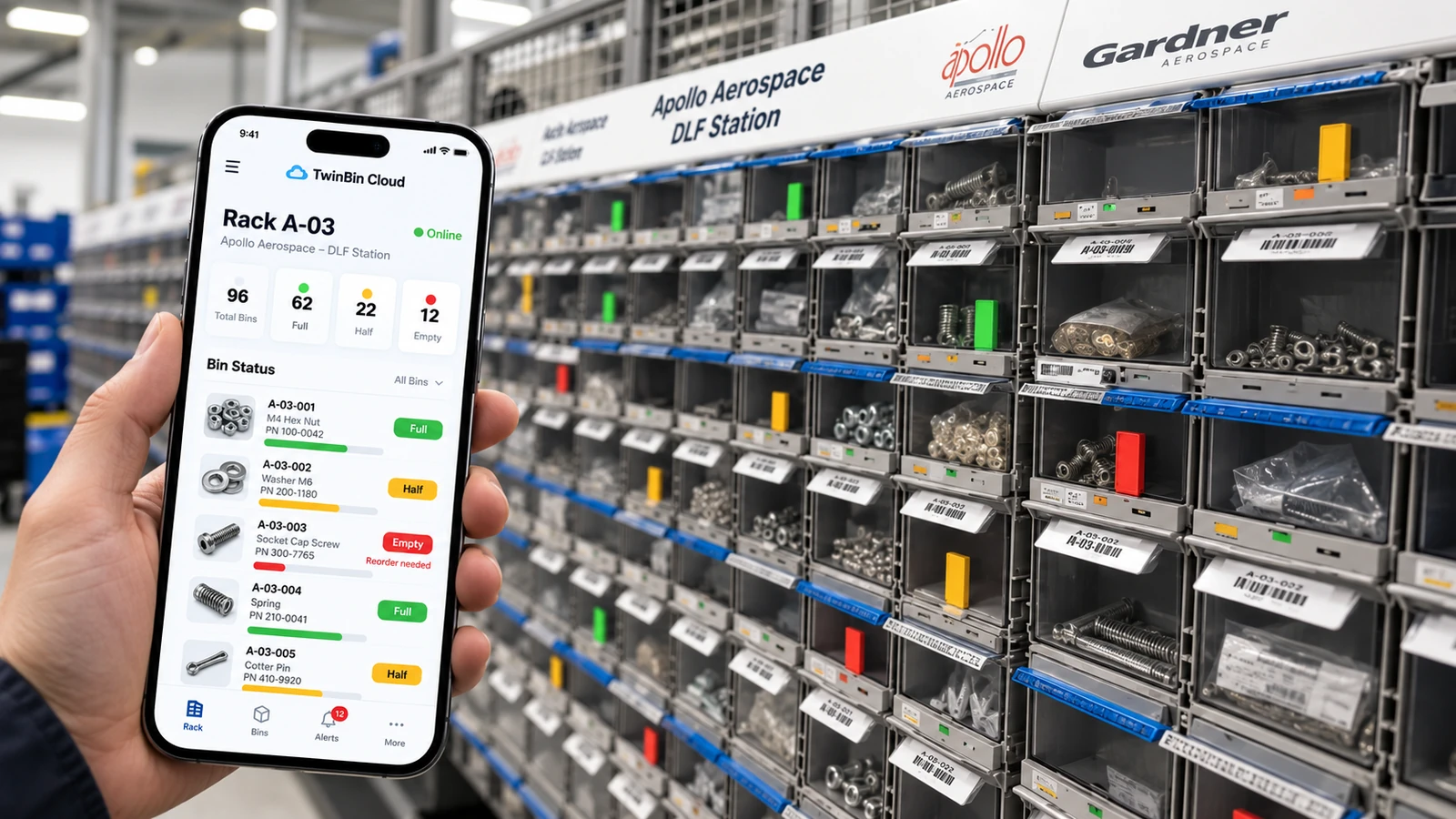
Inventory monitoring, engineered from the sensor up
How Toobler built TwinBin Cloud for Hurst Green Plastics — a connected bin-inventory system with a custom IoT sensor device, a wireless mesh of nodes and gateways, a cloud platform, and web and mobile apps.
 Case study Construction · Digital Twin · IoT
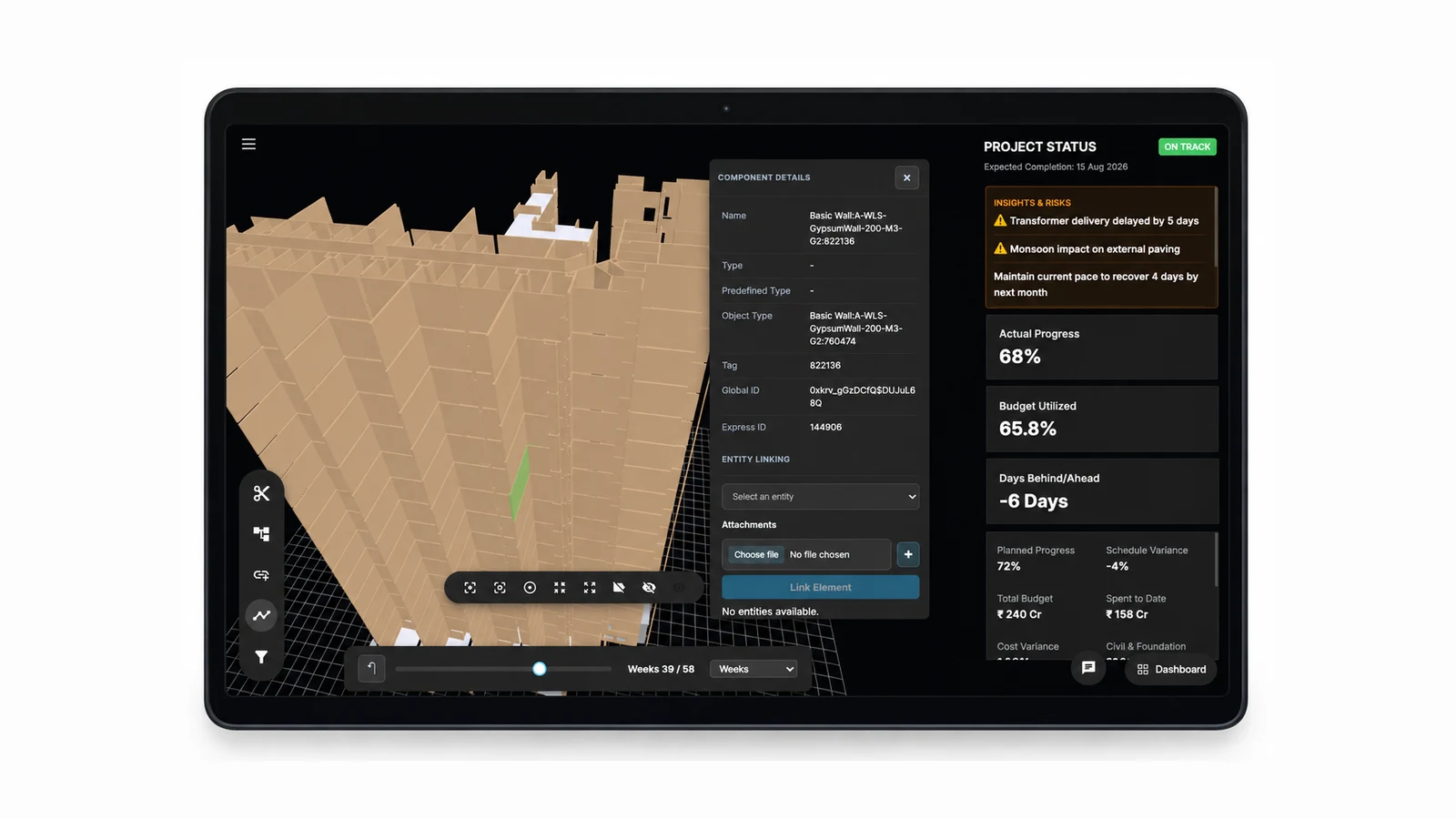
A Construction Progress Digital Twin, Integrated with BIM
How Toobler engineered a BIM-integrated construction progress digital twin for Nael — simulation, live monitoring and AI forecasting of cost, timeline and resources.
Bringing AI to a physical operation?
Map your assets, your data and the path from sensing to acting.