Moving permits, turned into a one-minute request
A Node.js and Angular platform that turns city moving-permit acquisition into a one-minute online request — engineered, integrated and operated for Permit Puller.

- Client
- Permit Puller
- Permits pulled
- 150,000+
- US cities
- 100+
- Permit request
- Under a minute
Moving a home or an office often means legally holding the curb — a city permit that reserves parking for the truck. The catch is that every city has its own rules, forms and departments. Toobler engineered the platform that turns all of that into a single online request, and has built, integrated and operated it for Permit Puller across a multi-year partnership.
Customer and context
Permit Puller (movingpermits.com) is a US permit-acquisition service, operating since 2004. It obtains moving-vehicle, container, dumpster and construction permits on behalf of individual movers, moving companies, contractors and event planners — handling the city paperwork, posting the physical no-parking signage ahead of the date, and removing it afterwards. Its promise to the customer is deliberately simple: request, print and park. Behind that simplicity sits software that Permit Puller has used to pull 150,000+ permits for 68,000+ customers across the country. Toobler is the engineering partner behind that software — building it, integrating it, modernizing it and keeping it in production.
The challenge
Permit acquisition looks like a web form. It behaves like a distributed operations problem.
- Every city is different. Rules, pricing, lead times and paperwork vary by city, and often by zip code. A national service has to hold all of that as structured data and apply the correct rule the instant a request arrives — not rely on someone remembering it.
- A request is a chain, not a click. Behind “request a permit” runs a sequence: validate the location, raise the customer and invoice in accounting, take payment, then issue. Each step depends on an external system that can be slow or fail. Run it as one blocking action and a single unresponsive third party breaks the whole request.
- The money has to reconcile. Payments and invoicing must tie back to the right customer and the right permit, cleanly enough to run a business on.
- It is a physical operation too. Signs go up 48–96 hours ahead and come down afterwards. The software has to coordinate real-world field work, not merely capture a form.
- It has to stay current. A platform live for many years, across a growing list of cities, needs modernizing in place — new features, new integrations, new infrastructure — without disruptive rebuilds.
The solution
Toobler engineered and operates the platform end to end.
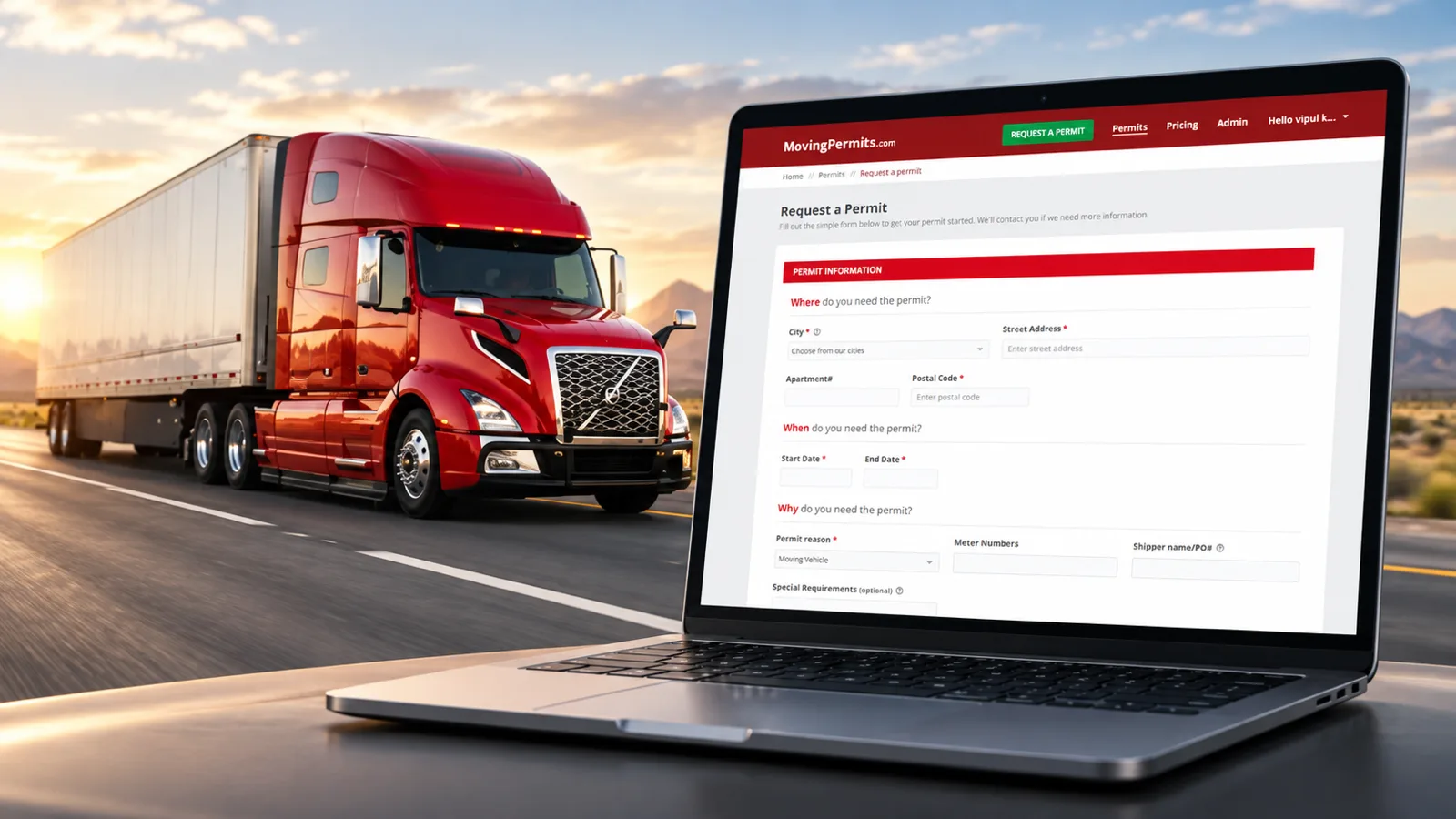
A one-minute permit request. The customer-facing application — an Angular single-page front end on a Node.js API — turns permit acquisition into an online request that takes about a minute: choose the permit type, enter the location and job details, pay, done. An embeddable quote widget extends the same entry point onto partner and affiliate sites.
A governed request pipeline. Each request is a tracked, multi-step background workflow rather than one blocking call:
- The location is resolved and matched to the right city’s rules.
- The customer and invoice are synced to QuickBooks.
- Payment is taken through Braintree.
- The permit is issued.
Every step’s status is recorded, and any external-service failure is logged for follow-up. It is the difference between a form that hopes each integration answers and a pipeline that always knows where a request is.
An admin system of record. From one back office, coordinators manage cities, zip codes, permit types, pricing, users and customer groups; generate and issue permits; and run audit and sign-takedown reporting. It is the operational core the business runs on day to day.
Integrations and a public API. Alongside QuickBooks and Braintree, the platform uses mapping and geocoding to drive its location rules, and exposes a token-scoped public API so partners can create and track permits programmatically. An affiliate program — embeddable badges, referral tracking and payouts — turns partner websites into a distribution channel.
Reach, delivery and mobile. City-specific landing pages give the service an organic footprint across its coverage area; a paperless workflow delivers issued permits and notifications to the right inboxes; and a native mobile app puts the service on a phone.
Built to last. Across the partnership the platform has been modernized in place and runs on AWS, with the security and operational hardening a long-lived production system needs — so it keeps growing rather than being torn down and rebuilt.
Results
- A permit request in under a minute, where the manual route means chasing a city department.
- National reach across 100+ US cities, each with its own rules held as data.
- Software that Permit Puller has used to pull 150,000+ permits for 68,000+ movers and companies.
- A multi-year production partnership: Toobler builds, integrates, operates and modernizes the platform, so Permit Puller’s team can concentrate on customers and city relationships rather than software.
What this means for logistics and field-operations software
Off-the-shelf tools rarely fit an operation whose rules change city by city and whose “transaction” spans validation, accounting, payment and a physical job on the curb. Permit Puller is the alternative in practice: custom logistics and field-operations software, engineered on the operator’s own workflow — the request pipeline, the integrations, the admin system of record, and the API and mobile surfaces. It was built and run by a long-term engineering partner rather than bought off a shelf. If you run a logistics or field-service operation on software that no longer fits, or that no vendor sells, talk to Toobler’s engineering team.
My experiences with the Toobler folks has been stellar. Their programming has been solid and their designs have been exceptional – a rare commodity in the outsourcing world. Without any hesitation – I will continue to use Toobler on all my projects.

Dave Backman
Founder, Permit Puller
Related work and capabilities
- Industry
Logistics & Freight
Freight data moves slower than the freight does. Toobler builds, integrates and modernizes the platforms logistics operators run on, and keeps them running.
Proof, engineered
Case studies from Toobler — real platforms engineered across event technology, construction and digital twins. The work behind the claims.