Industries
Engineering for Operational and Business-Critical Platforms
The systems and the outcomes change from sector to sector; the engineering underneath does not. Toobler applies one capability — integration, modernization, operational context and governed automation — across the industries that run on operational, business-critical platforms.
The industries we engineer for
Deep engineering for the operational, business-critical platforms each sector runs on — start with yours.
- Industry
Aviation & Asset Operations
Airlines, air cargo and ULD operators run on data that is hard to see and harder to trust. Toobler builds, modernizes and integrates the platforms behind it — data platforms, portals and field apps.
- Industry
Construction & Facilities
Construction data sits in separate systems — projects, cost, workforce, site — and no product template joins them the way your teams actually work. Toobler engineers platforms that do.
- Industry
E-commerce & Marketplaces
How you sell is specific to you, and a template store makes you sell the way it was configured. Toobler builds the stores, marketplaces, catalog search, checkout and integrations commerce businesses run on.
- Industry
Event Technology
Connect event platforms, CRM, data and AI workflows without replacing your core stack. Explore Toobler's event intelligence and engineering services.
- Industry
Fintech & Financial Services
Financial products carry rules that cannot be retrofitted later. Toobler designs, builds and integrates them — dashboards and analytics, accounting and payment integrations, and secure, compliant platforms.
- Industry
Healthcare
Patient apps, care coordination and clinical communication handle sensitive data. Toobler is the healthcare software development partner that engineers them.
- Industry
Hospitality & Hotels
A property runs on one system, and every gap in it becomes somebody's manual workaround. Toobler engineers the platforms hospitality operations depend on.
- Industry
Logistics & Freight
Freight data moves slower than the freight does. Toobler builds, integrates and modernizes the platforms logistics operators run on, and keeps them running.
- Industry
Manufacturing & Industrial
Production, inventory and maintenance data sits across MES, ERP modules and shop-floor devices that were never designed to talk to each other. Toobler connects them into one operational picture.
- Industry
Media & Video
Media products fail at the seams — ingest, transcoding, delivery, and the app your users actually touch. Toobler builds them from one to the other, on cloud-native pipelines.
- Industry
Sports & Recreation
A sports organization runs on membership, competition, results and the engagement that keeps participants coming back. Toobler engineers the mobile apps and platforms behind them.
Positioning
One engineering capability, applied across domains
Toobler is one engineering practice, not a set of separate industry businesses. Whether the platform runs events, aviation ground operations or a production line, the underlying problem tends to be the same shape: operational data trapped in disconnected systems, brittle software that critical processes depend on, and decisions that still wait on manual work.
So the engineering is the same too — integration, platform modernization, operational context and governed automation. What changes between industries is the systems we connect and the outcomes they produce, not the capability underneath. That is why depth built in one domain carries into the next, rather than starting over each time.
Method
Connect, Modernize, Understand, Act, Operate
The same five-stage method underpins every industry we serve — only the systems and outcomes differ.
- 01
Connect
Integrate the applications, SaaS tools, databases, documents and devices that hold operational data, so information flows reliably rather than sitting in silos.
- 02
Modernize
Rework the brittle legacy platforms that critical processes depend on, so the platform itself can keep changing.
- 03
Understand
Give teams and machines shared context — data engineering, analytics and, where it earns its place, digital-twin modeling — so state and relationships are visible.
- 04
Act
Add governed AI assistants, agents and workflow automation with human approval, so decisions and tasks move without waiting on manual hand-offs.
- 05
Operate
Keep engineering the platform after go-live — reliability, support and continuous improvement, not a one-off project.
Case study
Global B2B events groupProof from an enterprise event platform engagement
A multi-brand enterprise event platform, engineered and evolved over years
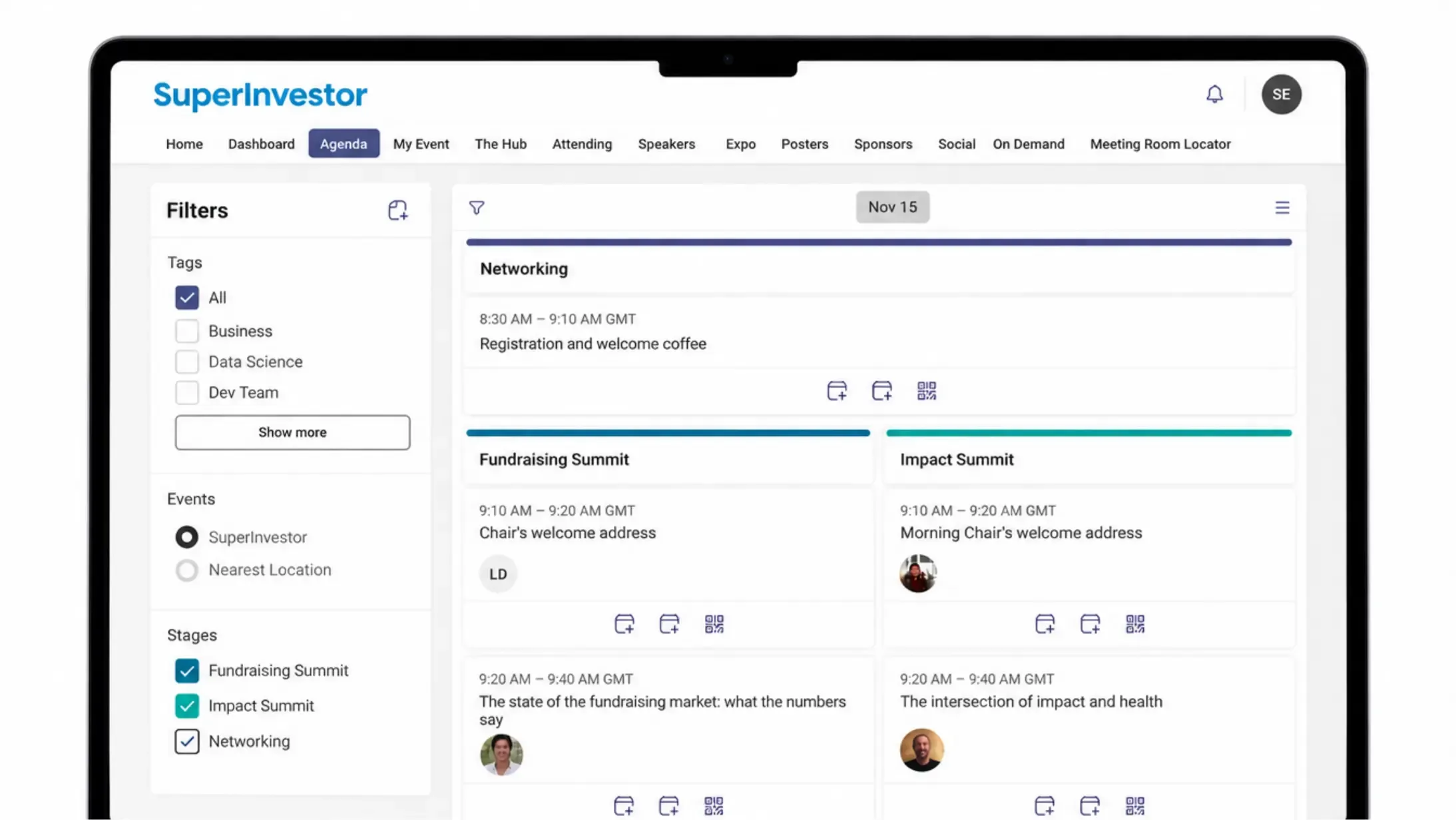
See how Toobler engineered enterprise event technology across registration, sponsors, exhibitors, meetings, mobile, reporting and integrations.
Discuss your operational platform
Whatever your industry, if your business runs on a critical operational platform, the same engineering method applies. Let's talk about where fragmentation is costing you most.